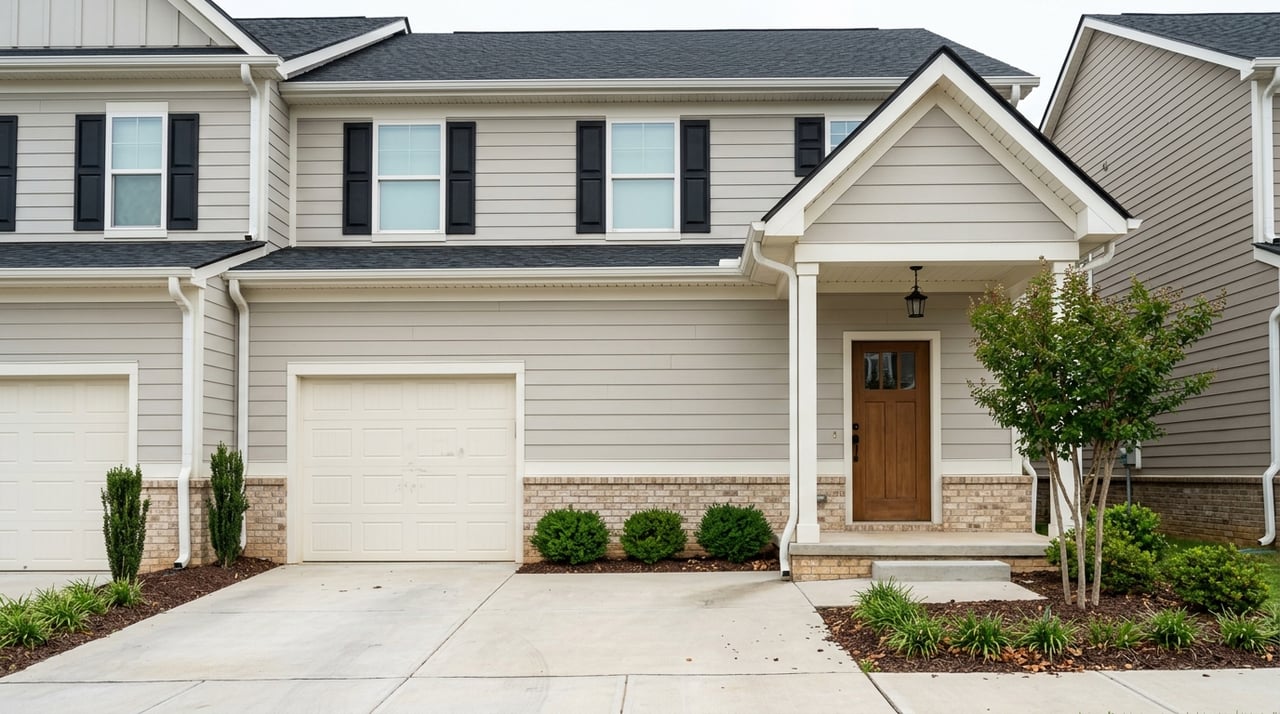
Wondering if a townhome in Pineville is the right move for you? It can be a smart option if you want a lower-maintenance home, a practical location near South Charlotte, and a price point that may be more approachable than many detached homes. The key is knowing that not all Pineville townhomes work the same way, and the details can affect your budget, ownership responsibilities, and daily routine. Let’s dive in.
Why Pineville townhomes draw buyers
Pineville sits in southern Mecklenburg County, between Charlotte and Fort Mill, which makes it a natural spot for buyers who care about commute convenience and access to the larger Charlotte area. If you want a home base that keeps you connected to South Charlotte while offering a more compact footprint, Pineville often lands on the shortlist.
The local numbers also show why townhomes get attention. Redfin currently lists 11 townhouses for sale in Pineville with a median listing price of $330,000, while the broader Pineville market shows a March 2026 median sale price of $466,000. Realtor.com reports a March 2026 median listing price of $434,900 for Pineville overall, which helps illustrate how townhomes may offer a different entry point than the wider market.
Compare layout before price
One of the biggest mistakes you can make is assuming all townhomes offer about the same amount of space. Current Pineville listings range from around 1,340 square feet with 2 bedrooms and 2.5 baths to larger 3-bedroom, 2.5-bath layouts around 1,772 to 1,983 square feet.
That means your decision should go beyond the word "townhome." You will want to look closely at the floor plan, where the bedrooms are located, how many flights of stairs you will use every day, and how the living space actually feels in person.
If you are a first-time buyer or downsizing, this can work in your favor. The North Carolina Housing Finance Agency notes that townhomes often appeal to buyers who want a more compact home, a lower price than many detached homes in city settings, and less exterior upkeep to handle on their own.
Know what you are actually buying
In North Carolina, a property marketed as a townhome is not always legally structured the same way. Some are part of a planned community governed under Chapter 47F, while others are legally condominiums under Chapter 47C.
That difference matters because ownership, common areas, and tax treatment can work differently depending on the legal structure. A condominium is defined in North Carolina as real estate with separate ownership portions and common ownership of the remainder, and each unit plus its interest in common elements is treated as a separate parcel of real estate and taxed separately.
For you as a buyer, the takeaway is simple: do not rely only on the marketing description. Review the deed, plat, declaration, and association documents so you understand exactly what you own and what the association controls.
Understand HOA duties and your duties
Many North Carolina townhomes are in planned communities. Under Chapter 47F, the association is generally responsible for common elements, while each lot owner is generally responsible for the lot and improvements on it unless the declaration says otherwise.
That is why HOA dues should never be viewed as just another line item. They are tied to what the association maintains, what you remain responsible for, and how much day-to-day upkeep you may avoid compared with a detached home.
The North Carolina Housing Finance Agency notes that dues often cover common-area upkeep and may also cover exterior maintenance and lawn care. That can make dues higher than what you may see in some single-family neighborhoods, but it can also reduce the amount of exterior work you need to manage personally.
Look closely at HOA costs and risks
A low monthly payment can look attractive at first glance, but you should always dig deeper into the HOA side of the numbers. In townhome communities, dues are often one of the biggest trade-offs.
You will want to confirm:
- The regular monthly or annual dues
- What services those dues cover
- Whether there are any approved special assessments
- Whether there are transfer or conveyance fees
- Whether there are any pending lawsuits involving the association
- Whether there are unpaid assessments tied to the property
NCHFA also points out that townhome and condo owners may face special assessments for large shared projects, such as roof replacement. That does not mean a community is a bad option, but it does mean you should review the financial picture before you commit.
Review the records you are entitled to see
North Carolina law gives buyers and owners important visibility into association records. For planned communities under Chapter 47F, the association must hold at least one meeting each year and must make records reasonably available to owners.
The law also requires the association to make an annual income and expense statement and balance sheet available to all lot owners at no charge within 75 days after the close of the fiscal year. It must also furnish a statement of unpaid assessments within 10 business days after a written request.
This matters because unpaid assessments can become a lien after 30 days, and late charges may accrue interest up to 18% per year unless the declaration says otherwise. If you are under contract on a Pineville townhome, reviewing these details can help you avoid surprises after closing.
Pay attention to required North Carolina disclosures
In North Carolina, sellers of most residential properties must provide both the residential property disclosure statement and the owners' association and mandatory covenants disclosure statement. These disclosures must be delivered no later than the time you make an offer.
The HOA disclosure should identify key items such as the association contact, regular dues, services covered, approved special assessments, pending lawsuits, and conveyance fees. If the disclosures were not delivered on time, the buyer may have the right to cancel.
That makes these forms more than routine paperwork. They are one of the clearest tools you have for understanding what ownership will really look like before you move forward.
Factor Pineville taxes into your budget
When you are comparing townhomes, it is easy to focus on price and HOA dues while overlooking taxes. In Pineville, property taxes are part of the real monthly carrying cost and should be part of your planning from the start.
The Town of Pineville states that property tax is collected by Mecklenburg County and that the town rate is $0.30 per $100 of assessed value as of July 1, 2025. Mecklenburg County's FY2026 budget sets the county tax rate at 49.27 cents per $100 of assessed value.
Combined, that works out to about 79.27 cents per $100 of assessed value before any special districts. Mecklenburg County also stated that 2025 tax bills were due September 1, 2025 and became delinquent after January 5, 2026.
Think through commute and location fit
For many buyers, Pineville's location is one of its strongest selling points. It gives you a southern Mecklenburg address with practical access to major roads and South Charlotte employment areas.
The commute question is especially important in this part of the region. NCDOT's current I-485 Express Lanes project adds one express lane in each direction between I-77 and U.S. 74, plus a general-purpose lane between Rea Road and Providence Road, which shows how important the south Mecklenburg freeway network is to daily travel.
If transit matters to you, CATS' I-485/South Blvd Station at 9508 South Blvd offers a 1,120-space park-and-ride and bus connections to routes 12, 42, and 58. For some buyers, that can make Pineville feel more flexible for workdays, errands, and regional travel.
Be honest about the lifestyle trade-offs
Townhome living can be a great fit, but it is not the same as owning a detached home. The North Carolina Housing Finance Agency notes that shared-wall living can bring noise, odors, and closer neighbors into the decision.
In exchange, you may get a more compact home, lower-maintenance ownership, and a location that supports a shorter or easier commute. The right answer depends on what matters most to you day to day.
A good Pineville townhome purchase is usually less about chasing the lowest price and more about matching the property to your routine. If the layout works, the HOA is well understood, and the location fits your life, a townhome can be a very practical long-term move.
Your Pineville townhome checklist
Before you move forward, keep these questions in front of you:
- Is the property a fee-simple townhome in a planned community or legally a condominium?
- What do the HOA dues cover, and what remains your responsibility?
- Are there any approved special assessments, pending lawsuits, transfer fees, or unpaid dues?
- Can you review the HOA budget, annual financials, and unpaid assessment statement?
- Does the floor plan fit how you actually live, especially stairs and bedroom placement?
- Are you comfortable with shared walls and less privacy than a detached home?
- Have you accounted for taxes, HOA dues, and commute costs in your monthly budget?
If you want help comparing Pineville townhomes with a clear eye on ownership details, monthly costs, and day-to-day fit, Sean Rush Jr. can help you move forward with confidence.
FAQs
What should you check before buying a townhome in Pineville?
- Review the legal ownership structure, HOA dues, services covered, special assessments, financial records, floor plan, taxes, and commute fit before you buy.
How much do townhomes cost in Pineville?
- Redfin currently lists Pineville townhouses with a median listing price of $330,000, while broader Pineville market figures are higher, which shows why townhomes may appeal to budget-conscious buyers.
Are Pineville townhomes usually part of an HOA?
- Many are in planned communities with an HOA, and the association is generally responsible for common elements while the owner is generally responsible for the lot and improvements unless governing documents say otherwise.
What do HOA dues usually cover in a North Carolina townhome community?
- HOA dues often cover common-area upkeep and may also include exterior maintenance and lawn care, but you should confirm the exact coverage for the specific community.
How are property taxes calculated for a Pineville townhome?
- As of the cited local rates, Pineville's town tax rate is $0.30 per $100 of assessed value and Mecklenburg County's rate is 49.27 cents per $100, for a combined rate of about 79.27 cents per $100 before any special districts.
Is a townhome in Pineville different from a condominium?
- Yes. A home marketed as a townhome may be legally structured as either a planned community property or a condominium, so you should verify the deed, plat, declaration, and association documents rather than relying on the listing label alone.